
Coverage time is not the same as production time
When a package includes eight or ten hours of coverage, that number starts when our event-day coverage begins and ends when the scheduled coverage is complete. It helps define how much of the live timeline we can capture, but it does not describe the full amount of labor behind the finished film.
The finished film is built across three stages: preparation before the event, production during the event, and post-production afterward. For many weddings and quinceaneras, those stages add up to roughly 40 to 55 hours of focused work for one event.
Before the event: 3 to 6 hours
Preparation usually begins with conversations about the people, traditions, locations, and moments that matter most. We review the timeline, identify travel and load-in needs, coordinate ceremony audio, confirm portrait windows, and plan around venue rules or changing light.
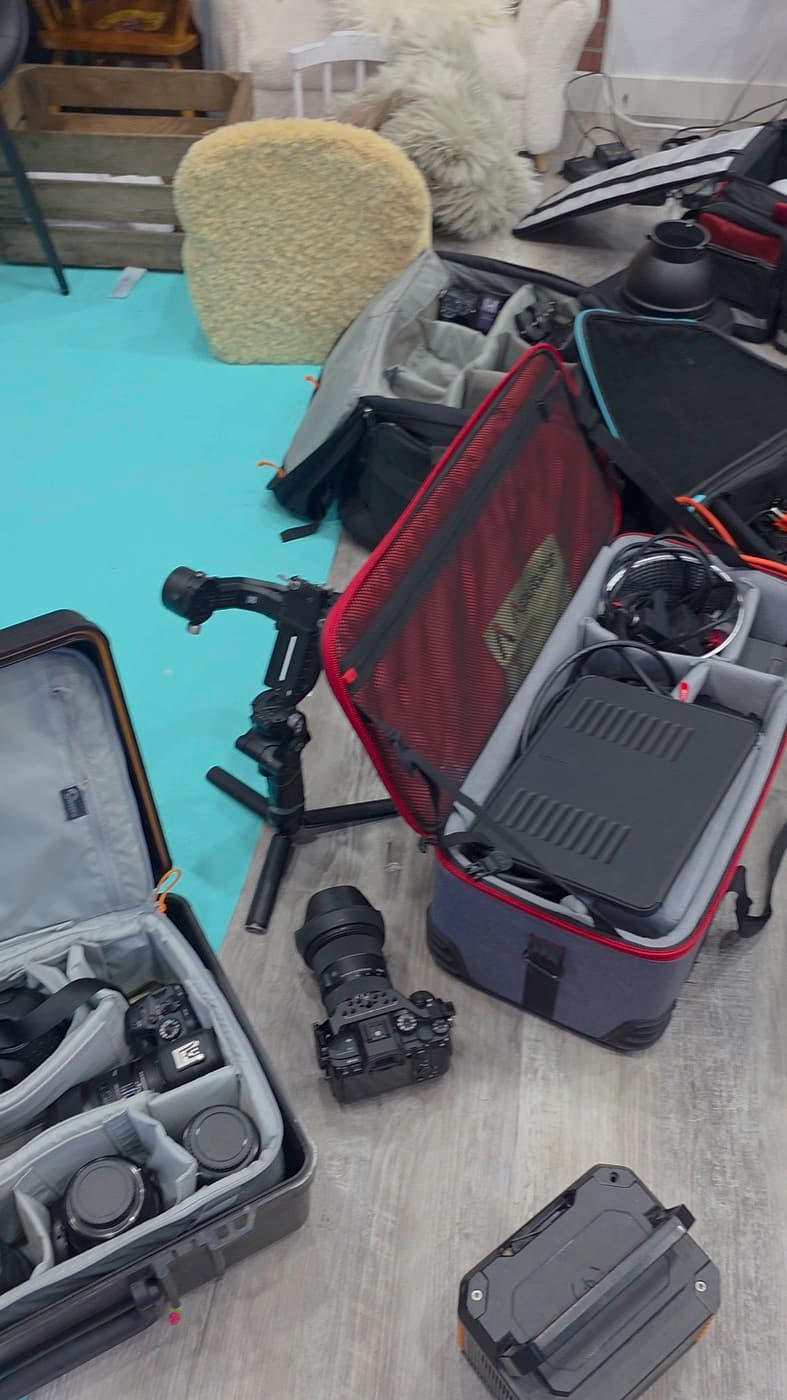
Gear preparation alone can take two to three hours. Cameras, lenses, tripods, stabilizers, microphones, recorders, lighting, batteries, media cards, and backups must be selected, tested, charged, labeled, packed, and organized for the specific event. A church ceremony and a dark reception do not require exactly the same setup as an outdoor commercial event.
Why meetings matter
A planning meeting is not separate from the creative work. It tells us which relationships to follow, which surprises are coming, how names should be spelled, and what cannot be repeated if we miss it. That knowledge shapes where cameras and microphones need to be before a moment begins.
During the event: 8 to 10 hours of active coverage
Event-day coverage is the part clients see. During that window, the team is continuously making decisions about story, light, sound, movement, camera placement, media capacity, battery changes, and what is about to happen next. Multiple cameras also mean multiple streams of footage and audio that must later be synchronized and reviewed.
Coverage hours still matter because they determine how much of the live day can be documented. They are not a timer on creativity; they are the production boundary that lets the team prepare the right crew and equipment while giving the client a clear expectation of what part of the timeline is included.
After the event: 30 to 40 hours of post-production
Post-production begins by safely copying and organizing every camera and audio file. The footage is backed up, labeled, synchronized, and reviewed before the main edit can begin. A ten-hour event filmed with several cameras can create many more than ten hours of material to evaluate.
Editing means choosing the moments that tell the story clearly, building pacing, cleaning dialogue, balancing music, correcting color, refining transitions, and checking the complete film for technical problems. Extended films, short cinematic films, speeches, ceremonies, and social edits each require their own review and export process.
The invisible quality-control pass
Before delivery, we watch the work again for audio consistency, color, spelling, timing, export errors, and playback. Then files are rendered, uploaded, organized, and prepared for delivery. This final pass is quiet work, but it is what helps a film feel polished instead of merely assembled.
A realistic total for one event film
A typical project may include 1 to 3 hours of meetings and timeline work, 2 to 3 hours of equipment and logistics preparation, 8 to 10 hours of live coverage, and 30 to 40 hours of post-production. That puts the real production commitment around 40 to 55 hours, before counting unusual travel, revisions, or additional deliverables.
This is why video pricing cannot be understood by dividing the package price only by the hours spent at the venue. Clients are investing in preparation, experience, production systems, careful editing, backups, and the responsibility of preserving moments that happen once.
Choosing the right amount of coverage
Choose coverage based on the moments you want documented, not on the assumption that fewer event-day hours remove the work after the event. Preparation and post-production still exist for shorter packages. The best starting point is your timeline: getting ready, ceremony, portraits, entrances, traditions, speeches, dances, and the ending you want your film to have.
When we recommend eight, ten, or twelve hours, the goal is to protect the story. We want enough time to work intentionally instead of rushing the moments that will matter years from now.