
Coverage begins at the agreed arrival time
When we arrive at the agreed time, the coverage clock begins. From that point forward, our photo and video team is there to follow the day, respond to the timeline, and document the moments that matter most within the hours and services included in the package.
No two quinceañeras unfold exactly the same way. Some families want every stage documented; others prefer to begin later and focus on the ceremony and reception. We use the timeline as a guide while staying flexible when hair and makeup take longer, travel changes, or reception activities shift.
Why we recommend starting with getting ready
Whenever the package allows, we recommend beginning with getting ready about an hour and a half before church. This part of the day adds depth to the story: the dress, shoes, jewelry, hair and makeup finishing touches, quiet nerves, family helping, and the reactions when everyone sees the quinceañera ready for the first time.
Getting-ready coverage gives a finished gallery or film a true beginning instead of opening halfway through the day. However, it is a recommendation rather than a requirement. If the family wants to begin at church, we can build the coverage around that plan.
Arriving early for the church ceremony
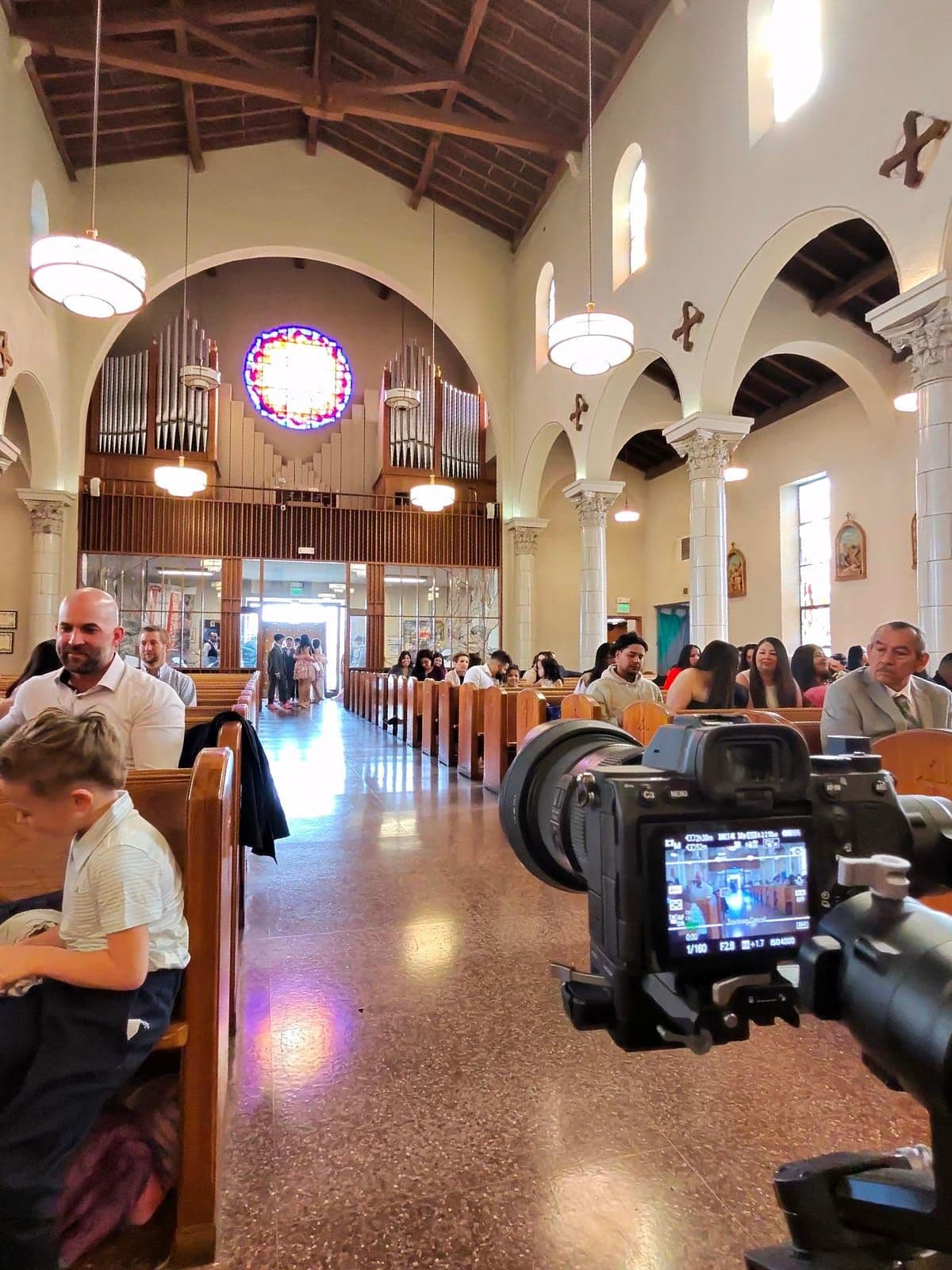
We like to reach the church about 30 minutes before the ceremony. That buffer gives us time to unload, understand the church rules, choose camera positions, prepare audio when video is included, and capture guests and family arriving without rushing the entrance.
During the ceremony, we focus on the entrance, blessings, meaningful traditions, family reactions, and the moments at the altar. Church guidelines vary, so we work respectfully within the space while protecting the best possible view of the ceremony.
Photos and video moments after church
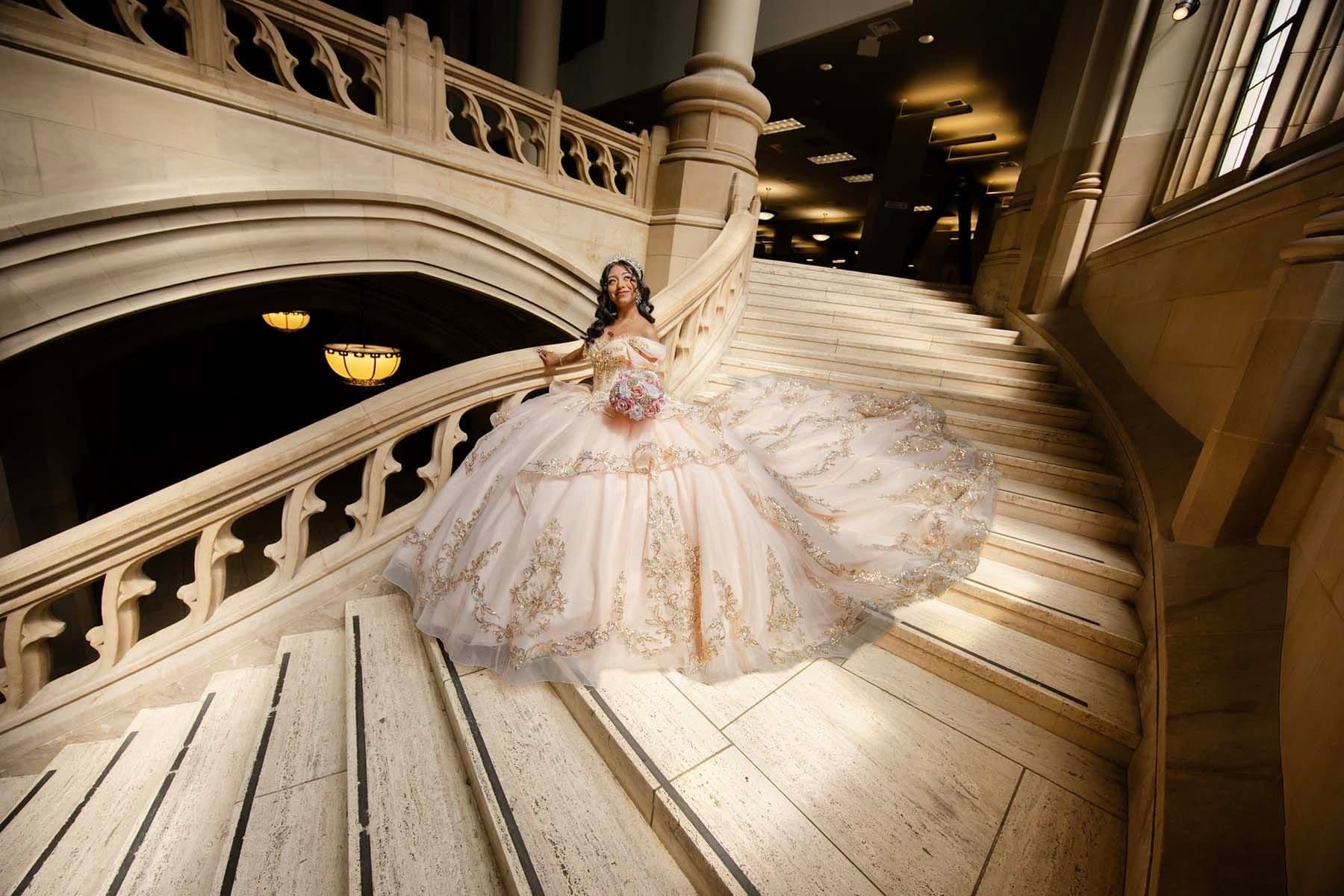
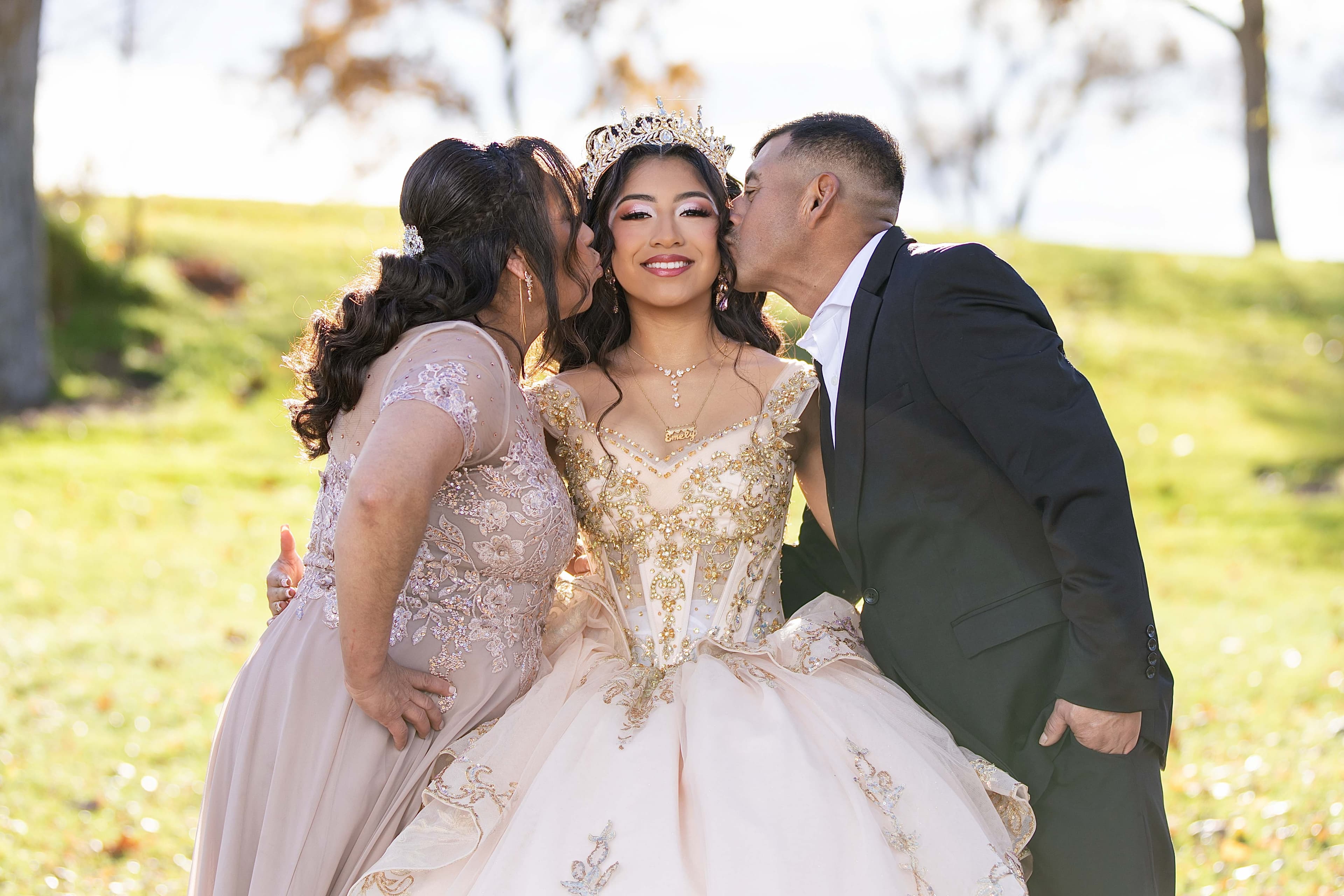
After church, what we do depends on the services in the package. When photography is included, this is often the time for altar portraits with parents, godparents, siblings, and the court. When video is included, we capture short cinematic clips and natural interactions while the photo session is happening.
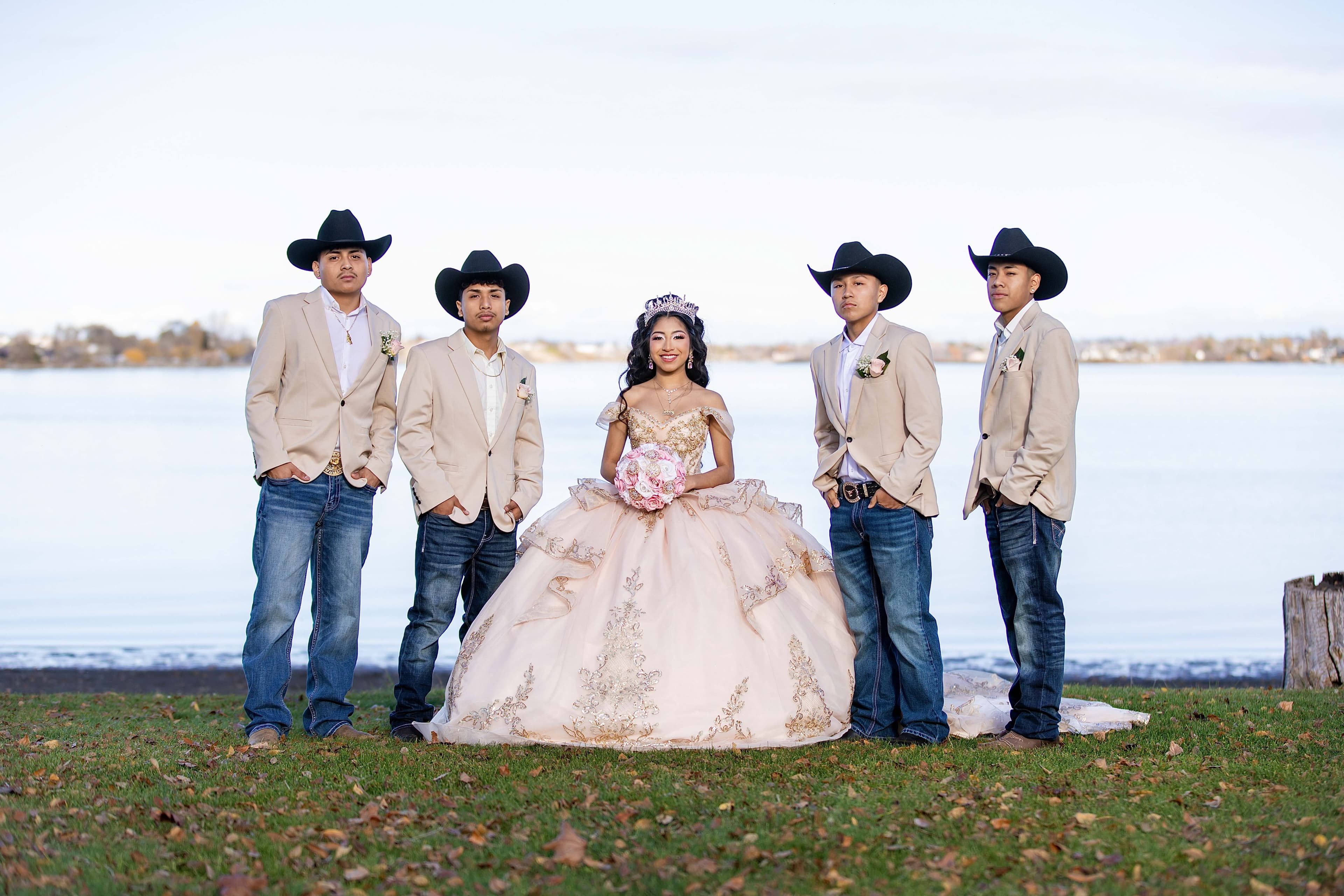
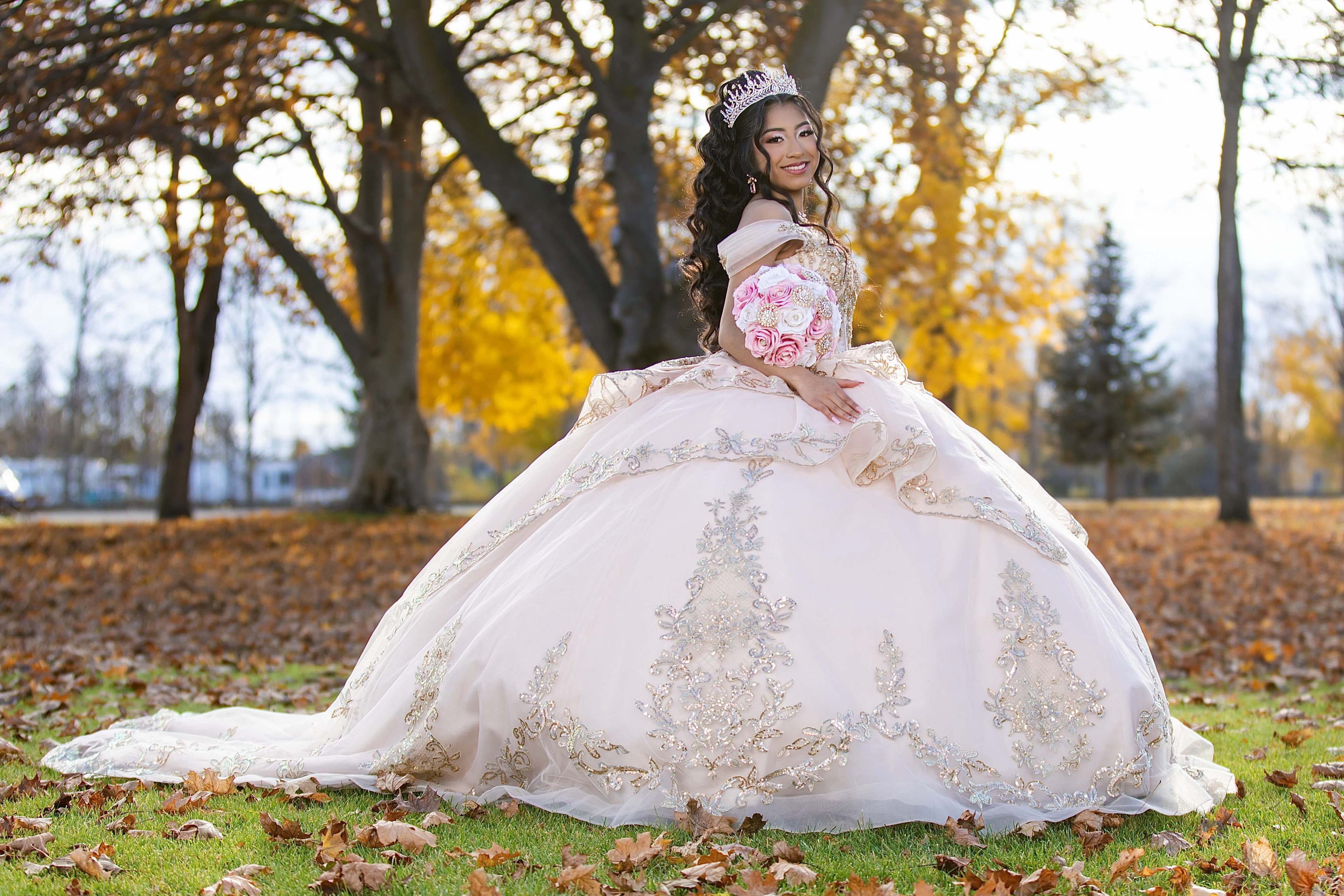
If time and travel allow, we then head to a park, garden, downtown location, or another setting chosen for portraits. This is where we like to get creative and have fun. We work with the quinceañera individually and include her damas and chambelanes when she has a court, mixing polished portraits with movement, laughter, and personality.
Reception details before the room fills
After the portrait session, we head to the reception and try to arrive before most guests. That gives us the best opportunity to photograph or film the cake, centerpieces, sweetheart table, stage, signs, florals, gifts, and other decorations in their pristine state.
Beating the crowd is not always possible—especially when locations are far apart or the timeline is running behind. When guests arrive first, we work around the room carefully and capture the details that are still available without interrupting the celebration.
A short meal break helps us prepare for the main activities
Once the room details are covered and dinner begins, we usually take a short meal break. This is also a practical reset: we check batteries and cards, review the next activities, reposition equipment, and coordinate with the DJ or planner so we are ready before the formal moments begin.
Around dinner and between activities, we continue watching for candid moments—family greetings, laughter at the tables, children dancing, emotional conversations, and the small interactions that make the celebration feel personal.
Traditions, cake, and the dance floor
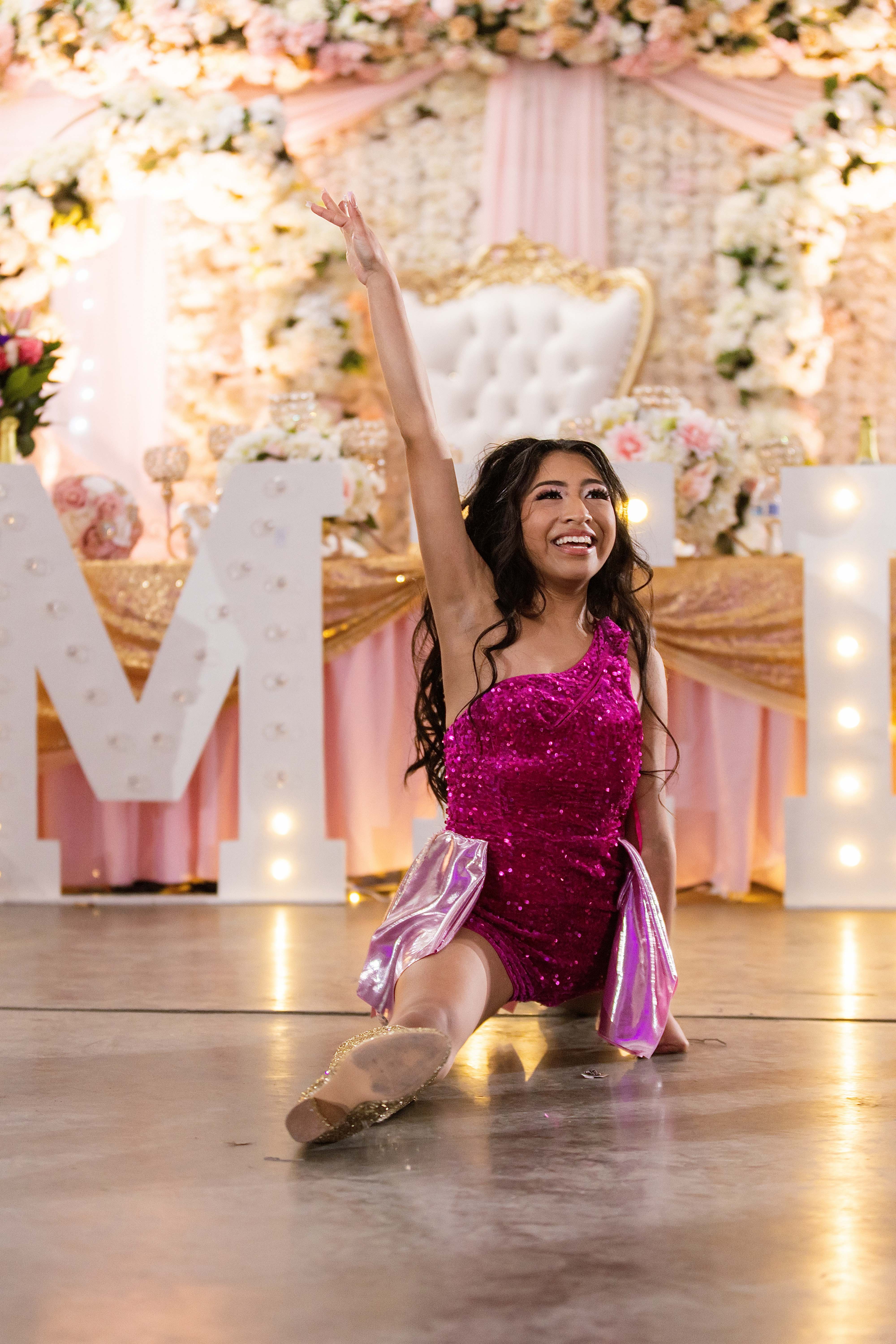
When the formal activities begin, we are ready for the grand entrance, first dances, father-daughter dance, waltz, coronation, changing of the shoes, last doll, toasts, surprise dance, and any traditions the family has planned. Every celebration is different, so the final list follows the family's timeline rather than a fixed template.
If the reception is running behind, we often recommend cutting the cake immediately after the main formalities. That helps make sure it is documented while the media team is still within the scheduled coverage window. Afterward, when time allows, we capture the energy of the open dance floor and the celebration settling into its party rhythm.
How coverage usually ends
As the scheduled end time approaches, we look for a natural closing point after capturing some dancing and final guest moments. If the quinceañera and family are busy enjoying the celebration, we may quietly pack up when coverage ends. If there is a good opportunity, we always appreciate saying goodbye before we leave.
The goal is to leave without pulling the family away from their guests while still completing the story within the agreed coverage time.
After the quinceañera: post-production and delivery
After the celebration, the work moves into post-production. Photo files are backed up, selected, color-corrected, and prepared for the final gallery. Video footage and audio are organized, synchronized, edited, color-graded, reviewed, and exported according to the deliverables included in the package.
Customers can follow their project status in the New Diamond Productions client portal. When a package includes digital deliverables, the portal is also where those finished files or private delivery links become available.
A timeline helps us protect the story
The smoothest coverage begins with a realistic timeline that includes travel, setup, portraits, dinner, and formal activities—not only their start times. Sharing that schedule with us before the event helps us recommend the best arrival time and decide which parts of the day fit comfortably within the selected coverage.
Clients can also upload a PDF or image of their schedule directly to their booking in the client portal. That keeps the latest version connected to the project and easy for our team to review.